


Independent Study
Internal research at TSFA suggests that along with attendance, independent study is the key contributor to student performance (after great teaching). The EEF reviewed 48 studies on the effects of independent learning and found:
1. Independent study has an overall positive impact on student performance in exams – the older the students, the greater the impact.
2. Independent study that is clearly linked to classroom work tends to be most effective. This means it is important to make the purpose of independent study clear to pupils.
3. The quality of the task set appears to be more important than the quantity of work required from the pupil. There is some evidence that the impact of independent study actually diminishes as the amount of time pupils spend on it increases beyond a certain point.
4. In the most effective examples independent study was an integral part of learning, rather than an add-on.
Research also suggests that the students who perform best commit to at least 5 hours of independent study per week, per subject. Ideally, this should not all take place in one sitting and independent study should be completed in a manner where it can be spread across a working week.
It is our aim to gradually build and embed the necessary skills needed for students to be able to do this independently by the time they reach Year 13.
Strategies
1. Promoting the building as a place for optimal independent study (IS)
2. Setting, Signposting and Collecting Independent Study
3. Teaching Independent Study
4. Factoring for the ebbs and flows of college life
5. Quality Assurance
6. Student motivation and independent study
All teaching staff set independent study weekly through the ‘Assignments’ section of the MS Teams classroom.
What constitutes great independent study at TSFA:

Revision
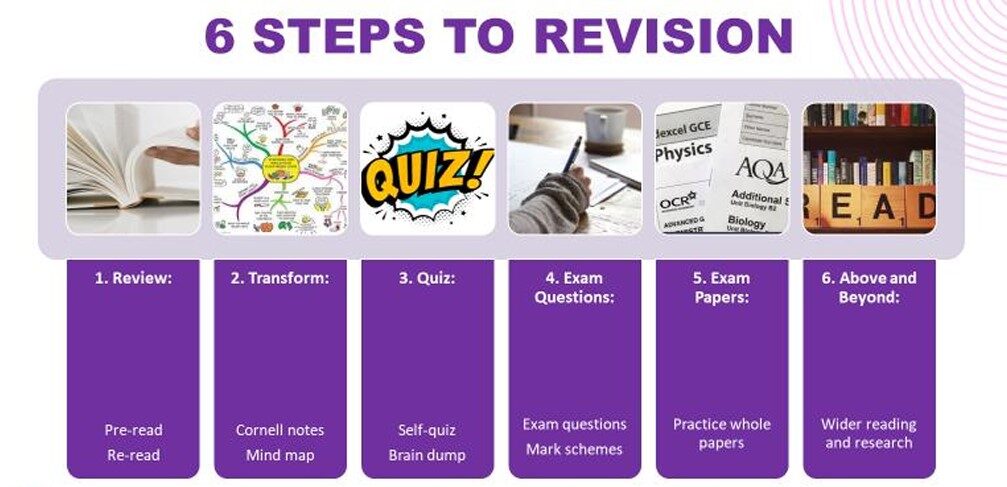
The TSFA ‘6 Steps to Revision’ is based on research including the work of the VESPA Mindset team, which suggests that effort, in particular the right type of effort, makes a significant difference to student performance at A Level (Oakes & Griffin, 2016). Our six steps are supported by Anglia Ruskin University (ARU) and have been adapted from a blog first published by the Megan Issott (Long Road Sixth Form College) in the Sixth Form Colleges Association in 2022.
Students are explicitly taught the ‘6 Steps’ within their Trinity+ sessions and staff link the independent study they set to one of the ‘6 Steps’ so that students are able to see the learning process in action and understand HOW to revise for key assessments.
- Review: students are encouraged to go over previous lesson content at strategic points in line with the forgetting curve.
- Transform: flashcards, mind-maps, Cornell notes – students need to be taught how to use these methods successfully.
- Quiz: regular low stakes testing to develop strong neural pathways between the short- and long-term memory.
- Exam Questions: ensuring students are confident in applying the knowledge. This is often done through H.I.I.P as well as independent study.
- Exam Papers: more frequently set as independent study in the latter part of Y13 but also used in assessments to form a holistic picture of attainment.
- Above and Beyond: staff are expected to set an element of challenge within independent study to support excellence in students. This may take the shape of podcasts / videos / supplementary reading etc.
IT Support
If you have any problems accessing or using the online learning platforms, please contact the IT team on it@sixth.trinitymat.org or call 01422 232055